01. Orient
Look around and identify the safest, clearest route through the room.
Guide / Morning / 2026
A practical editorial guide to gentle transitions, familiar surroundings, and the first few minutes of a day.
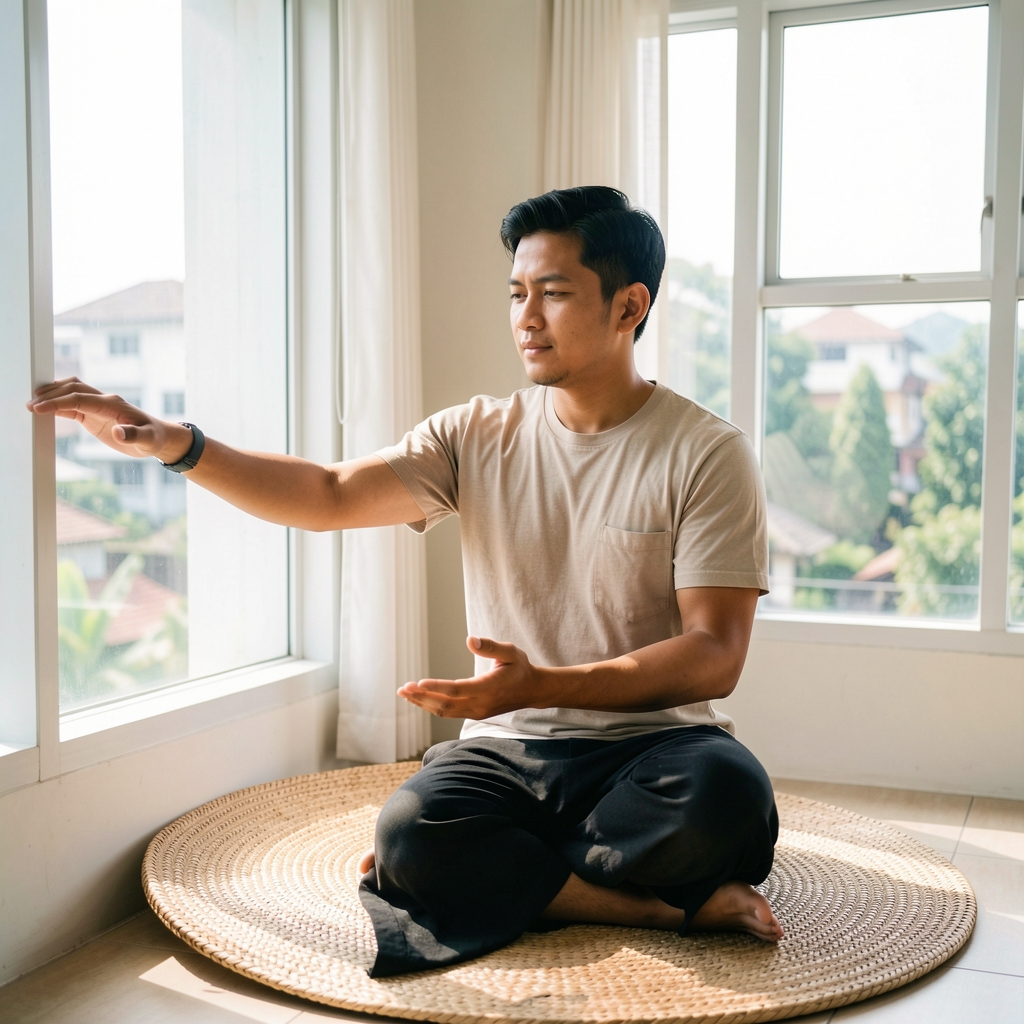
A morning sequence can start before any formal exercise. Notice the floor, the light, the temperature, and the distance between the bed, bathroom, kitchen, and doorway. These details change how a routine feels and whether it can be repeated on a busy day.
Choose one transition that already belongs to your morning. A slow reach after standing, a few shoulder circles while water boils, or a quiet walk to the window can become an observation point rather than another demand.
| Setting | Possible focus | Practical question |
|---|---|---|
| Bedroom | Transition from rest to standing | Is the floor clear and the light sufficient? |
| Kitchen | Short pauses between tasks | Can the sequence stop safely if a task changes? |
| Outdoor path | Walking rhythm and temperature | What surface, weather, and footwear are present? |
| Work area | Preparing for seated time | Can the chair and desk be approached without rushing? |
This is a flexible order, not a scorecard or a fixed prescription.
Look around and identify the safest, clearest route through the room.
Stand, sit, or walk at a pace that allows you to notice how the morning feels.
Choose two or three familiar movements with a comfortable range.
Carry the same calm attention into breakfast, commuting, or the first task.
Use one transition, such as standing from a chair, and keep the sequence brief enough to end without hurry.
Spend more time noticing the surface, breath, and temperature before selecting a movement.
Adapt the setting rather than forcing the original plan. A hallway or doorway may be enough.
The question is not whether a morning looks impressive. The question is whether the routine leaves enough attention for the rest of the day.
Return to both feet, a stable seat, or a familiar walk whenever the setup no longer feels clear.
Questions can be sent through contact.php. Derive is at 120 Cihampelas Street, Bandung, West Java 40131, Indonesia; phone +62 22 731 8975. Reviewed 14 October 2026.
Repeatability comes from reducing decisions. Put the mat or chair in a known place, choose a familiar transition, and set a duration that leaves room for breakfast or commuting. The routine can change when the weather, household, work schedule, or available space changes. A flexible plan is easier to review than a rigid promise made at the start of a week.
Morning light and temperature can affect how a room feels. In Bandung, a cool early room may invite slower preparation, while humidity or rain may make an indoor route more practical. These are environmental observations, not reasons to force a plan. Record what the setting allowed and select a different option when the original arrangement is no longer clear.
If a movement raises a question, stop at a stable point and seek appropriate local guidance rather than relying on a general article. Derive does not assess an individual through a page view or contact message. A reader can ask us about the wording or source of a guide without sending private records.